ServicesCrowns & Bridges
Crowns & Bridges in Auburn
A cracked tooth, a big old filling that keeps breaking, or a gap where a tooth used to be. We fix these with crowns and bridges that fit your bite. You get a written plan with the cost and what's included before we start.
When a Crown or Bridge Is the Right Fix
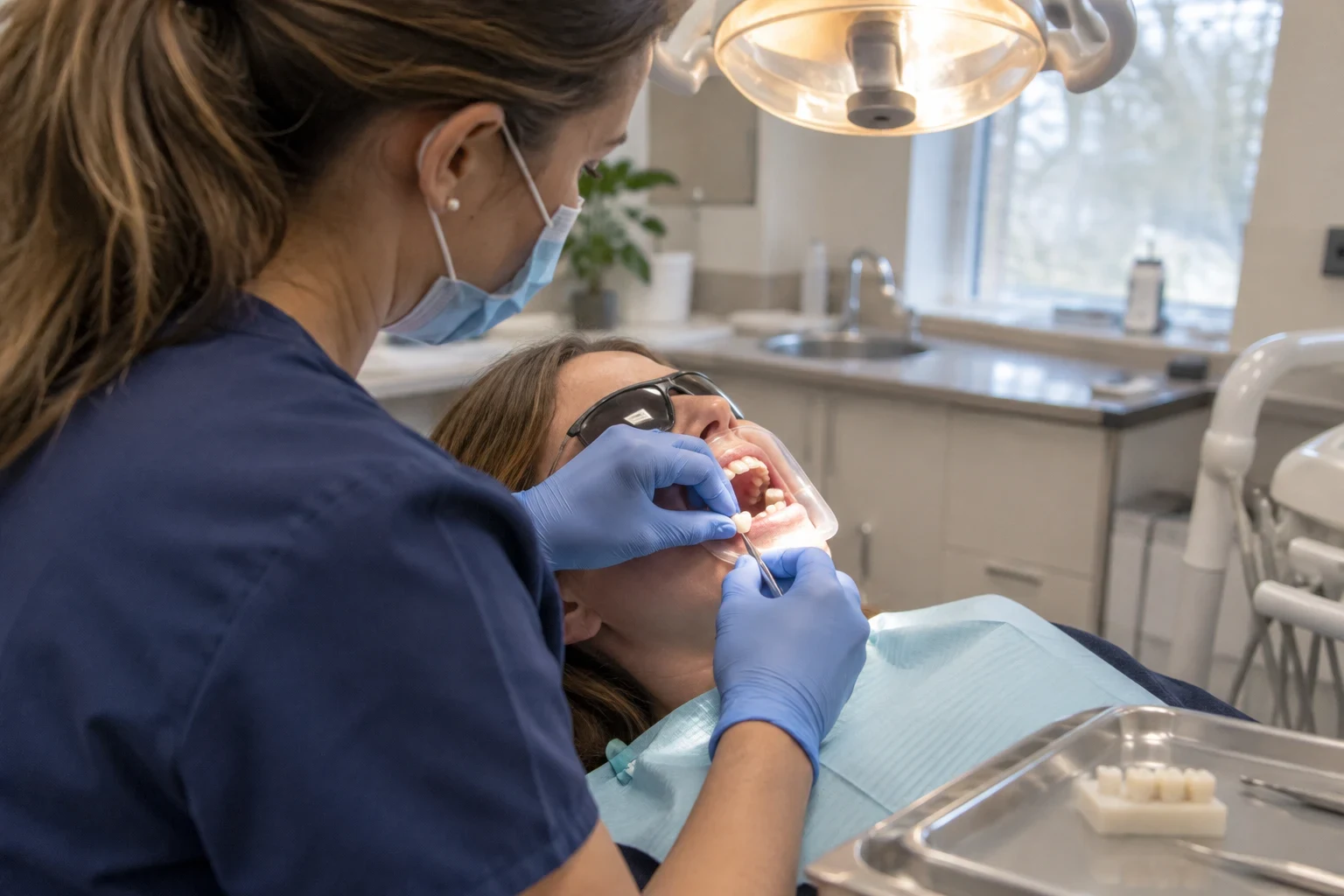
A crown is a cap that covers the whole visible part of a tooth. We use one when a tooth is too broken, worn or heavily filled for a filling to hold. It is also the usual cover for a tooth after a root canal, since those teeth get brittle.
A bridge fills a gap left by a missing tooth. It anchors to the teeth on each side and holds a false tooth in the space. Closing that gap keeps your other teeth from drifting and makes chewing even again.
Not every worn tooth needs a crown. If a filling will do the job, we'll tell you that and point you to our fillings page instead.
What Your Crown or Bridge Work Includes
- Exam and X-rays
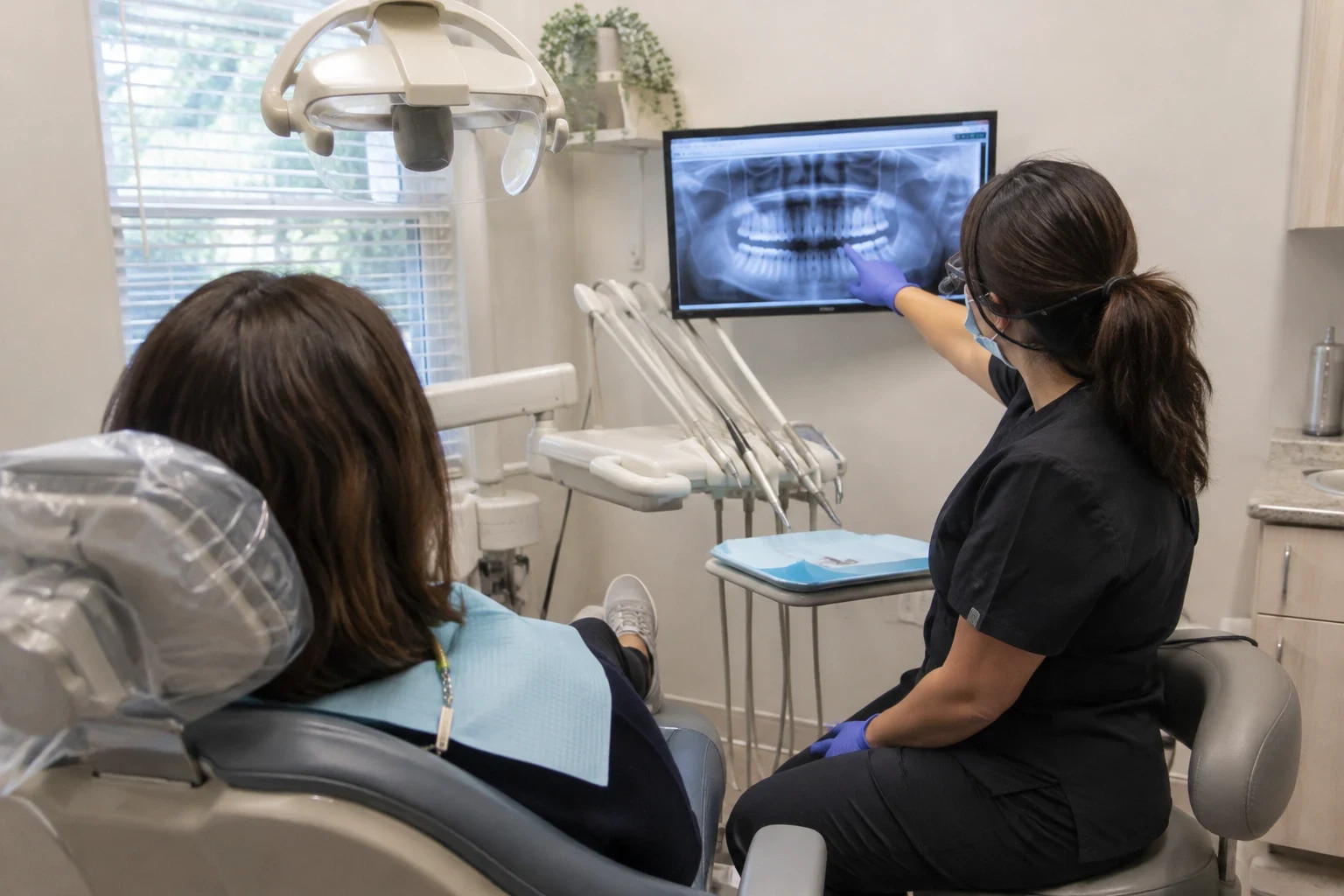
- We look at the tooth, the root and the bone around it. That tells us if a crown will last or if something else has to be handled first.
- A written treatment plan
- Before any drilling, you get the plan on paper. It lists each step, the material, and the cost of each line. If your insurance is involved, we show what we expect it to cover and what's left for you.
- Tooth prep and a temporary
- We numb the area, shape the tooth and take an impression. You leave with a temporary crown or bridge so you can eat and smile normally while the final one is made.
- Material options explained
- Choices like porcelain, zirconia, porcelain fused to metal and gold each wear differently. Front teeth usually call for a natural look. Back molars take the most chewing force, so strength matters more there.
- Fitting and bite check
- At the second visit we try in the final piece, check the color and adjust the bite before cementing. A crown that sits high will make your jaw sore, so we take the time to get it right.
Signs You May Need a Crown or Bridge
A crack or chip you can feel
Cracks tend to spread with every bite. A crown holds the tooth together before it splits down to the root.
Pain when you bite down
Sharp pain on release after biting often points to a cracked tooth. It's worth getting checked before it gets worse.
A filling that keeps failing
If the same tooth has been refilled more than once, there may not be enough tooth left to hold another one.
A gap from a lost tooth
Neighboring teeth slowly tip into an empty space. Your bite shifts and food starts to catch. A bridge stops that drift.
An old crown that's loose or dark at the edge
A gray line at the gumline or a crown that wiggles can mean decay underneath. That needs a look soon.
What Moves the Cost of a Crown or Bridge
Every mouth is different, so we price after the exam and put it in writing. The number on your plan is the number we work from. If something changes once we're in the tooth, we stop and tell you before doing more.
Crown or bridge size
A single crown costs less than a bridge. A bridge covers at least three units: two anchor teeth and the false tooth between them.
Material
Porcelain, zirconia, metal-based and gold crowns are priced differently. We'll explain the tradeoffs in looks and strength for that spot in your mouth.
What's under the tooth
Deep decay may need a buildup to give the crown something to hold. A tooth with an infected nerve may need a root canal first.
Insurance and payment
We accept most dental insurance plans. Patients without insurance can ask about our Office Dental Plan, and the CareCredit Patient Payment Plan can spread the cost over time.
How the Visits Go
- 1
Consult and written plan
We examine the tooth, take X-rays and talk about what we see. You go home with a written plan and cost before you agree to anything.
- 2
Prep visit
We numb the tooth so you're comfortable, remove any decay and shape it. Then we take an impression and place a temporary.
- 3
The lab makes your crown
A dental lab builds the final crown or bridge to match your bite and shade. This usually takes a couple of weeks. Go easy on sticky and hard foods on that side until then.
- 4
Fit and cement
We remove the temporary, try in the final piece and check the bite. Once it fits right, we cement it in place and you're done.
Crown and Bridge Questions
Does getting a crown hurt?
We numb the tooth fully before we start, so most patients feel pressure, not pain. The gum around the tooth can be a little tender for a day or two after the prep visit. Over-the-counter pain relief usually handles it.
How long will my crown last?
It depends on your bite, your brushing and flossing, and whether you grind your teeth. Many crowns last a long time with good care. Regular exams and cleanings let us catch problems at the edges early.
What if my temporary crown comes off?
Keep it, and give us a call to set up a time to put it back. Don't leave the tooth uncovered for long, since the prepared tooth can shift or get sensitive.
Should I get a bridge or just leave the gap?
A gap may seem fine at first, but nearby teeth tend to lean into it over time. That can change your bite and make cleaning harder. We'll look at your case and tell you plainly if a bridge makes sense, or if pulling a damaged tooth first through our extractions service is the better start.
Will insurance cover my crown?
Many plans cover part of a crown or bridge when it's needed for the health of the tooth. Coverage varies by plan. Your written plan shows our estimate of what your insurance pays and what you pay, so there are no surprises.

Get That Tooth Looked At
A cracked tooth or an open gap rarely gets better on its own. Call to set up an exam, and we'll give you a written plan and cost before any work begins. We see patients from Auburn, Worcester, Millbury and nearby towns.