ServicesInvisalign / Clear Aligners
Invisalign and Clear Aligners in Auburn
We straighten crowded, gapped or shifted teeth with clear trays you can take out to eat and brush. Before you commit, you get the plan and the cost in writing, so you know what the treatment covers and what it does not.
What clear aligners can fix
Clear aligners are thin plastic trays made from a scan of your teeth. Each set moves your teeth a small amount. You switch to a new set every week or two until your teeth reach the planned position.
They work well for mild to moderate crowding, small gaps, teeth that drifted after braces years ago, and some overbite and underbite cases. Big jaw problems or badly rotated teeth may need a different approach. If aligners are not a good fit for you, we will say so at the first visit.
We do not start until you have a written plan. It lists the number of trays, the estimated time, whether you need attachments or small reshaping, and what retainers cost at the end. No surprise add-ons halfway through.
What your aligner treatment includes
Exam and digital scan
We check your teeth and gums first. Cavities and gum problems need to be treated before teeth start moving. Then we take a digital scan instead of messy putty molds.
A preview of the result
From the scan, you can see how your teeth are planned to move, step by step. You can ask questions and decide before anything is ordered.
Attachments when needed
Some teeth need small tooth-colored bumps placed on them so the trays can grip and turn them. We tell you up front if your plan uses them and how many.
Check-in visits
You come in every several weeks so we can make sure each tooth is tracking. If one falls behind, we catch it early.
Retainers at the end
Teeth want to drift back. Retainers hold the result, and their cost is listed on your plan from day one.
Signs clear aligners may be right for you
Teeth that overlap
Crowded teeth trap food and plaque. They are harder to floss and more likely to get cavities between them.
Gaps you notice in photos
Small spaces between front teeth are one of the most common reasons patients ask about aligners.
Shifting after old braces
Many adults wore braces as kids and stopped wearing a retainer. A short aligner plan can often bring those teeth back.
Uneven wear or jaw strain
A bite that does not line up can wear some teeth down faster than others. We will look at the wear pattern and tell you if moving teeth would help.
You want something low-key at work
Trays are hard to spot in conversation, and you take them out for meals and photos when you need to.
How aligner treatment goes, start to finish
- 1
First appointment
We look at your teeth, take X-rays if needed, and scan. We talk through what you want changed and whether aligners can do it.
- 2
Written plan and cost
You get the tray count, timeline and full cost on paper. We also go over your insurance and payment options. You take it home and decide.
- 3
Fitting day
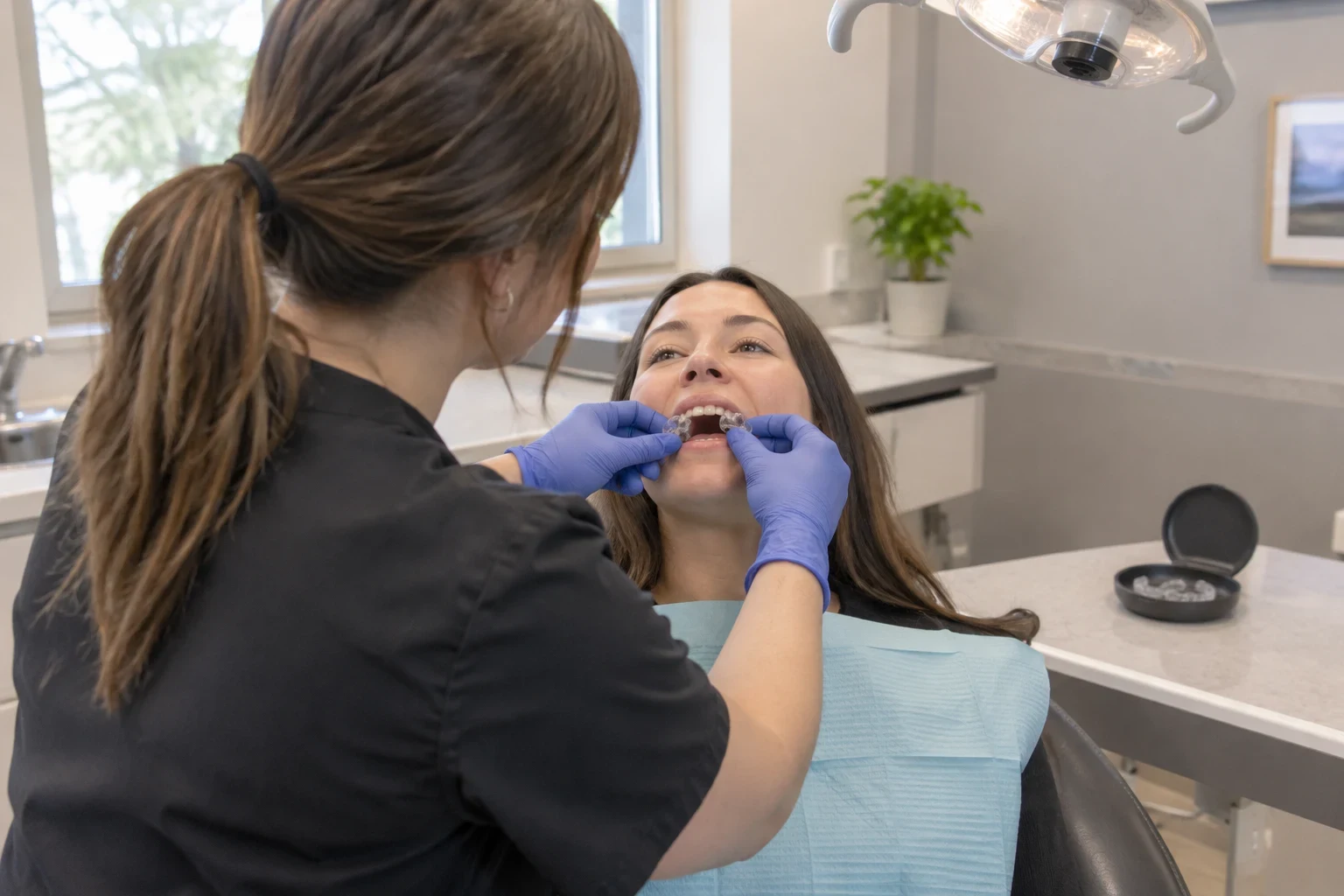
We place any attachments, fit your first trays and show you how to put them in and take them out. Plan on wearing them about 20 to 22 hours a day.
- 4
Check-ins and new trays
At each visit we check fit and progress and hand you your next sets. Most patients feel pressure for a day or two with each new tray, then it eases.
- 5
Retainers
When your teeth are in place, we remove attachments, polish the spots and fit your retainers.
What sets the cost of clear aligners
Aligner cost depends on how much your teeth need to move and how long that takes. We put every part of it in your written quote before you start. We accept most dental insurance plans, offer an Office Dental Plan for patients without insurance, and offer the CareCredit Patient Payment Plan.
- How many trays you need
- A short plan for a few front teeth costs less than a full plan that moves both arches and adjusts the bite.
- Work needed first
- Cavities, gum treatment or a cleaning may come before aligners. Those are listed separately so you can see each piece.
- Refinement trays
- Sometimes a tooth needs extra trays near the end. We tell you up front whether those are already in your plan.
- Retainers
- Your plan lists the retainer type and cost, so it is not a surprise at the last visit.
- Your insurance
- Some plans have an orthodontic benefit and some do not. We check your coverage and show what you would pay out of pocket.
Clear aligner questions we hear
Something not covered here? (508) 501-5509
How long does aligner treatment take?
It depends on your case. Small fixes can be done in a few months, while fuller cases take longer. Your plan gives an estimated timeline, and wearing the trays as directed keeps you on it.
Do aligners hurt?
Most patients feel pressure or tightness for a day or two after switching to a new tray. It is usually mild. The trays are smooth plastic, so there are no wires to poke your cheeks.
Can I eat and drink with them in?
Take them out to eat and for anything but plain water. Brush before you put them back so food is not trapped against your teeth. That habit keeps both your teeth and trays clean.
Will my dental insurance cover clear aligners?
Some plans include orthodontic coverage, often with a lifetime limit, and some leave it out. We check your benefits and show the numbers on your quote. If you have no insurance, ask about our Office Dental Plan and the CareCredit Patient Payment Plan.
What happens if I lose a tray?
Let us know right away. Often you can move to the next tray or go back to the last one while a replacement is made. We will tell you which, so your teeth stay on track.
Can I whiten my teeth while wearing aligners?
Many patients wait until treatment is done, then do teeth whitening so the color matches once everything is in place. We can talk through timing at your check-ins.

Find out if aligners fit your smile
Patients come to us from Auburn, Worcester, Millbury and nearby towns. At the first visit we look, scan and give you a plan on paper you can take home.