
ServicesFillings
Fillings in Auburn, MA
A cavity is easier and cheaper to fix while it is small. We find it, show it to you, write down which teeth need work and what it costs, then fill it with tooth-colored material that matches your smile. No add-ons once you are in the chair.
What a Filling Fixes
Decay eats a hole in the hard outer layer of a tooth. Left alone, it keeps going toward the nerve, and a small problem turns into a root canal, a crown or an extraction. A filling stops that. We clean out the soft, decayed part and rebuild the tooth so it is sealed and strong enough to chew on.
We use composite resin, a tooth-colored material that bonds to the tooth. It works for new cavities, small chips and old silver fillings that have cracked or started leaking at the edges.
Before we start, you get a written plan. It lists each tooth, how many surfaces need work and the cost. If a tooth is too damaged for a filling to hold, we tell you that plainly and explain the other options.
What Your Filling Visit Includes
- A look at the tooth first
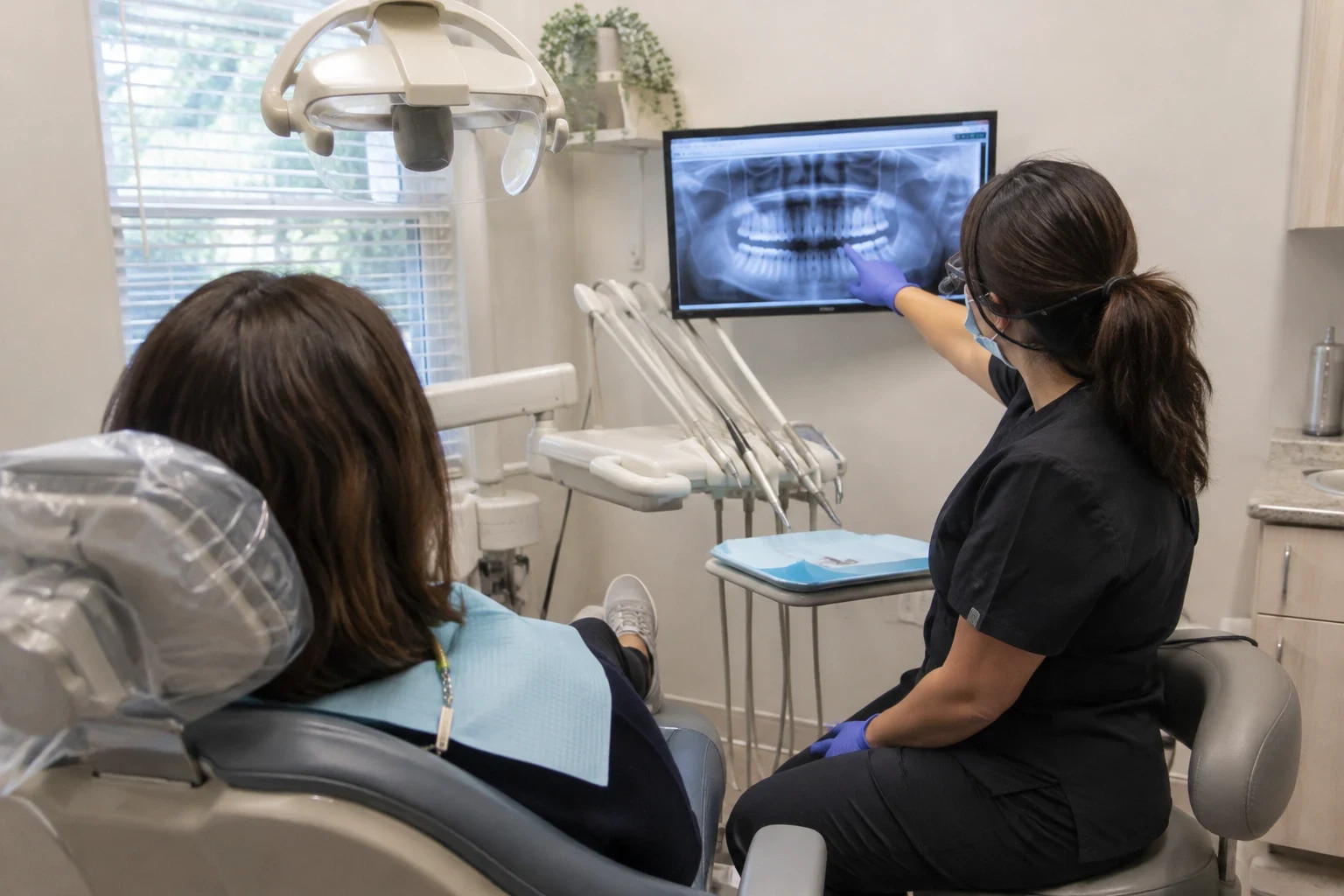
- We check the tooth and take X-rays where needed. That shows how deep the decay goes, which a mirror alone can miss.
- Photos and a plain explanation
- We show you what we see on the screen. You know why a tooth needs work before you agree to anything.
- A written quote
- Each tooth and each surface is listed with its cost. What is on the paper is what we do.
- Numbing that actually works
- We numb the area and wait until it takes. If you still feel something, tell us and we stop and add more.
- Tooth-colored composite
- The resin is matched to your tooth shade, placed in thin layers and hardened with a curing light. It is set before you leave.
- Bite check and polish
- We adjust the filling so your teeth meet the way they did before, then polish it smooth so it does not catch food or floss.
Signs a Tooth May Need a Filling
Zings with cold or sweets
A sharp twinge from ice water or candy that fades quickly is often an early cavity or a worn spot.
Food keeps getting stuck
If floss shreds or food packs into the same spot every meal, there may be a hole or a broken edge between teeth.
A dark spot or rough edge
Brown or gray spots, or a rough patch your tongue keeps finding, are worth a look.
An old filling that feels different
Cracks, chipped corners or a dark line around an old silver filling can mean decay is getting in underneath.
Pain when you bite
Pain on chewing can be a cracked tooth or deeper decay. Sometimes a filling handles it. Sometimes a crown is the better fix, and we will say which.
What Moves the Cost of a Filling
A filling is priced by the tooth and by how much of the tooth needs rebuilding. You get those numbers in writing before we begin. We accept most dental insurance plans, offer an Office Dental Plan for patients without insurance and take the CareCredit Patient Payment Plan.
Number of surfaces
A small cavity on one side costs less than decay that wraps around two or three sides of the tooth.
Which tooth
Back molars take more chewing force and are harder to reach, which can change the work involved.
Replacing an old filling
Taking out an old filling and any decay under it adds time compared with a fresh cavity.
Your insurance or plan
Coverage varies by plan. We check what your benefits pay toward fillings and show your share on the written quote.
How the Appointment Goes
- 1
Exam and written plan
We confirm which teeth need work and go over the written quote with you. Nothing starts until you say okay.
- 2
Numbing
A topical gel goes on first, then the local anesthetic. Most patients feel pressure and vibration, not pain.
- 3
Removing the decay
We clear out the soft, damaged part of the tooth and keep as much healthy tooth as we can.
- 4
Placing the filling
The resin goes in layer by layer, each one hardened with a light. Then we shape it to fit your bite.
- 5
Before you go
We polish the filling and check your bite one more time. The numb feeling usually hangs on for part of the afternoon. Hold off on chewing on that side until normal feeling is back.
Fillings Questions
Does getting a filling hurt?
The numbing shot is the part most people notice, and we use a gel first to soften it. Once the area is numb, you should feel pressure but not pain. If anything hurts, raise your hand and we stop.
Can I eat after a filling?
Composite is hardened before you leave, so the filling itself is ready. Wait until the numbness wears off so you do not bite your cheek or tongue. Some mild sensitivity for a few days is normal.
How long do fillings last?
It depends on the size of the filling, where it is and your habits. Grinding, chewing ice and skipped cleanings shorten their life. We check your fillings at each visit on our Exams & Cleanings schedule so small problems get caught early.
Will my insurance cover it?
Many plans cover part of a filling. We accept most dental insurance plans and will check your benefits so your share shows up on the written quote. If you have no insurance, ask about our Office Dental Plan.
What if the hole is too big for a filling?
A large filling in a weak tooth can crack. When that is likely, we will tell you and explain a crown instead. Our Crowns & Bridges page covers how that works.
Do you do fillings for kids?
Yes. Baby teeth get cavities too, and they matter for chewing and for holding space for adult teeth. Our Kids' Dentistry page explains how we keep young patients comfortable.

Fix the Small Cavity Before It Grows
Patients come to us from Auburn, Worcester, Millbury and nearby towns. Set up a visit, and you will know exactly what needs filling and what it costs before we pick up a drill.