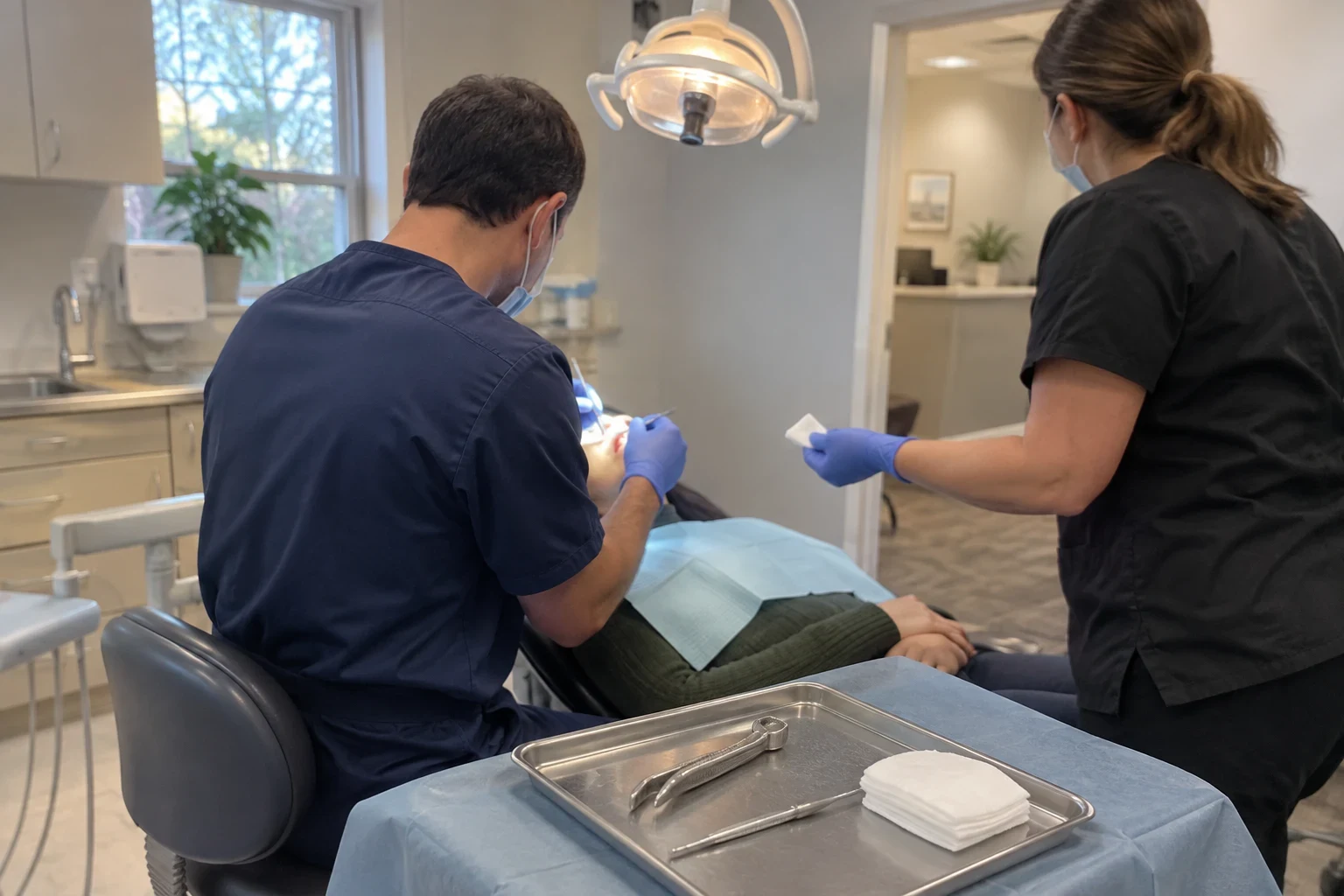
ServicesExtractions
Tooth Extractions in Auburn
Some teeth can't be saved. A deep crack, a big infection or a crowded wisdom tooth can mean the best move is taking it out. We check the tooth, tell you plainly if it can be kept, and put the scope and cost in writing before we start.
Deciding Whether a Tooth Should Come Out
Keeping your own tooth is our first choice. Plenty of problems end with a filling or a crown. Some teeth, though, are past fixing. The break goes below the gumline, the decay has reached the root, or the bone holding the tooth has thinned out. A tooth in that shape tends to bring back pain and infection if it stays.
We start with X-rays and walk you through the images. If the tooth can be kept, we say so and explain what saving it would take. If taking it out is the better path, we write up a quote covering the extraction, any imaging and the follow-up visit. The price you see is the price you pay once you sit down.
Adults and families come to us from Auburn and towns close by, such as Worcester, Millbury and Oxford. A lot of them have put up with a sore tooth for weeks and simply want an honest read on it.
What Your Extraction Visit Includes
Exam and X-rays
We check the tooth, its roots and the bone that holds it. The shape and angle of the roots tell us whether the removal will be quick or take more work.
The plan and price on paper
Before we start, we write down the work and the cost. If insurance should pick up part of it, we show the amount we expect them to cover and what remains for you.
Full numbing first
We numb the area and test it before we begin. Pressure is normal. Sharp pain is not, so speak up and we pause.
Simple or surgical removal
A tooth that sits fully above the gum can usually be loosened and lifted free. When a tooth is broken off or still buried, we may need to make a tiny cut in the gum to reach it, or split the tooth so it comes out section by section.
Clear instructions for healing
We send you off with gauze and a printed sheet covering what to eat, what to avoid and what to expect over the next few days.
A look at what comes next
An empty space can let the teeth beside it lean in. If filling the gap makes sense, we go over choices such as a bridge, explained on our Crowns & Bridges page, so you can plan.
Signs a Tooth May Need to Come Out
A tooth that's cracked deep
If a crack runs down into the root, a crown can't hold it together. Biting often hurts, and the pain can come and go.
Swelling or a bump on the gum
A pimple-like bump, a bad taste or swelling near one tooth can point to an infection at the root. Sometimes that tooth can be treated. Sometimes it can't.
A loose adult tooth
Adult teeth should not wiggle. Looseness often means the bone holding the tooth has been lost to gum disease.
Wisdom teeth causing trouble
Pain at the back of the jaw, sore gums that flare up, or food trapped behind the last molar are common reasons people ask about wisdom teeth.
Decay too big to fill
When a cavity has eaten away most of the tooth, there may not be enough left to rebuild. We'll tell you honestly whether a filling or crown is still possible.
How the Day Goes
- 1
Check and confirm
We review your X-rays, health history and any medications. Blood thinners and some health conditions change how we plan, so tell us about them.
- 2
Go over the written quote
You see the plan and the cost before we start. Ask anything. You can take time to decide if you want to.
- 3
Numb and remove
Once the area is numb, we gently loosen the tooth and take it out. A simple extraction often takes only a few minutes. A harder one takes longer, and we tell you that up front.
- 4
Stop the bleeding
We place gauze and have you bite down. If needed, we close the spot with a few stitches.
- 5
Recovery and follow-up
We go over aftercare before you leave. Most people feel sore for a few days. We set a follow-up if your case calls for one.
What Moves the Price of an Extraction
Every tooth comes out a little differently, so the price comes from what the X-ray shows. We walk you through each factor and write down the total before any work begins. If the plan has to change partway, we stop and talk with you first.
- Simple or surgical
- A whole tooth that lifts out cleanly is the lower-cost case. A tooth snapped off at the gum line, or one still sitting under bone, takes more work and costs more.
- Root shape and tooth position
- Hooked roots, roots near a nerve or a tooth lying on its side need extra time and a slower approach.
- Number of teeth
- Each tooth is priced on its own. Taking out more than one in a single visit can still spare you a second trip.
- Insurance and ways to pay
- We accept most dental insurance plans. No insurance? Ask about our Office Dental Plan for patients without insurance. The CareCredit Patient Payment Plan is also available if you want to pay over time.
Common Questions About Extractions
Something not covered here? (508) 501-5509
Will it hurt?
We make sure the area is numb before we begin, so expect pressure rather than sharp pain. Some soreness for a few days afterward is normal. For most patients, the over-the-counter pain relief we explain at the visit is enough.
When can I go back to my normal meals?
For the first day or two, eat soft foods that aren't hot, like yogurt, eggs or mashed potatoes. Avoid straws, smoking and anything hard or crunchy while the area heals. Most people are eating as usual in about a week, though it depends on which tooth came out.
What is dry socket?
Once a tooth is out, a blood clot fills the empty space and protects the bone. If that clot comes loose too soon, the bone is left bare and a strong ache can start a few days later. Following the aftercare steps cuts the risk. If your pain is climbing instead of easing, phone us and we will check it.
Do I need to replace the tooth?
Not in every case. Some people do fine without a back tooth, but an open space can let other teeth tip or move over time. We will tell you whether a bridge or another option fits your situation. There is no need to decide on extraction day.
Can you take out wisdom teeth?
We remove many wisdom teeth right here in the office. If one is buried deep or sits close to a nerve, we may refer you to an oral surgeon and explain the reason. You will know the plan before anything is done.

Find Out What That Sore Tooth Needs
Tell us which tooth is giving you trouble. We look at it, let you know whether it can stay, and hand you the plan and price in writing before we touch it.